Mid-summer in Vermont

It always seems the summer starts to get away from me around this time.  I did manage to go out and take some photos today after all the family left.  We had a full house over the 4th and got to eat some great local meat, including my cured sausage and bacon, eggs and produce from the backyard and homebrew.  I finally smoked some local pastured pork shoulder into some delicious pulled pork in the barrel smoker.  It was in there about 5 hours and to be honest it probably could’ve gone another hour or two as it wasn’t quite as “falling apart” as I hoped.  Still very good though, with a great smoke ring and nice bark.

The summer so far has been a strange one weather-wise in Vermont.  After a mild sunny May, it seemed like it rained all of June.  I think we’ve had rain almost every day for the last 3 weeks.  That means we still have a bit of lettuce and other greens holding on in July!  But also means the tomatoes and peppers aren’t as happy as they could be.  However, most things are holding up well.  The potatoes look great and all the brassicas are enjoying the cooling effects of the rain.  We’re even still getting some radishes.

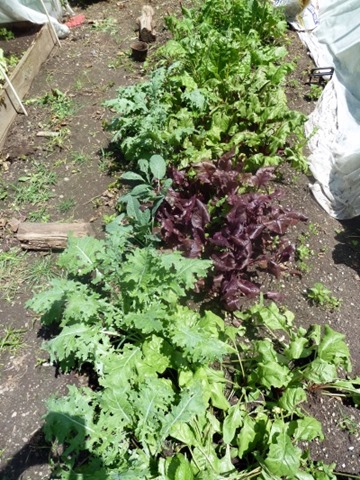
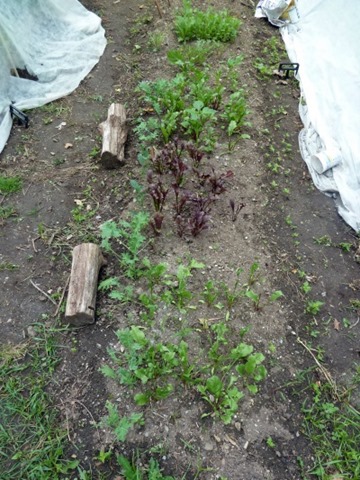
Anyway, I just added a bunch of new photos to Flickr if you want to see the latest progress.  I did want to show one before and after photo that I think it’s interesting.  This is a row of kale and beets.  The first photo is from June 16th and the second photo is from today.
beetsmidjune

beetsearlyjuly

See more photos at Garden 2013 on Flickr
Homemade Brats

Since I started trying my hand at making sausages, one of the things I’ve wanted to try is homemade brats.  While you can find fresh brats almost anywhere in the midwest, they are harder to come by in New England.

Fortunately they are just a fresh sausage that get their flavor from good meat and a certain set of seasonings.  Most recipes call for a mix of pork and veal, but veal is tough to come by and even tougher to come by if you are looking for a humane option.  Plus it doesn’t add much to the mix other than a certain creaminess.  Certainly most of the actual meat flavor comes from the pork.

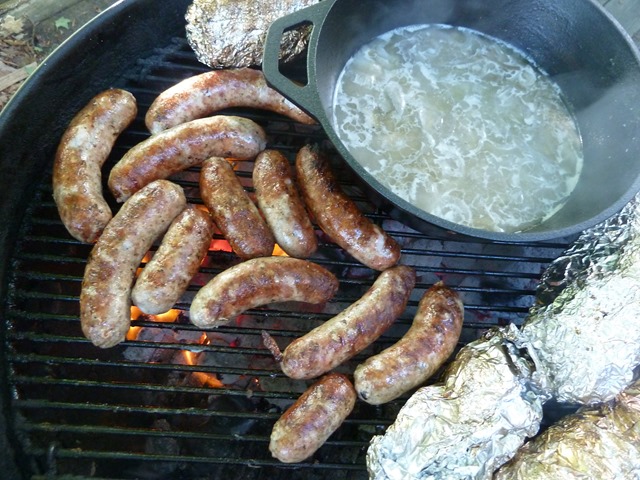
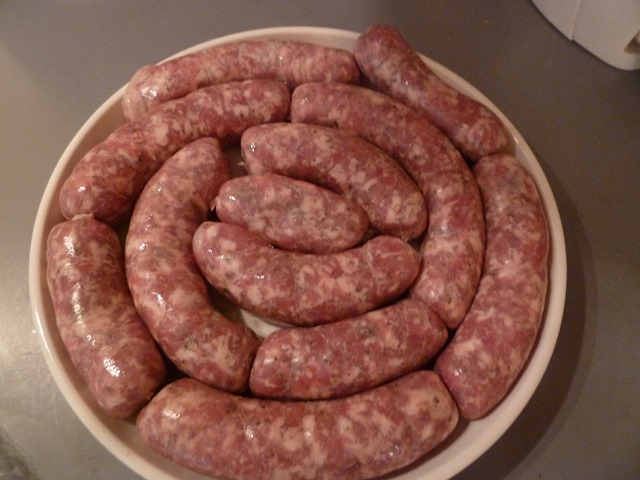
So I just made all pork brats, using some wonderful pork shoulder from Jericho Settler’s farm and some fat back.  Here is the result, both just after stuffing and on the grill. They turned out great, although I will certainly be tweaking the seasoning mix a bit.

P1010882

P1010883

Some quick garden 2013 updates

Due to a nice warm spring here in Vermont, our garden is off to a great start.  Here are some photos from a couple of weeks ago, stuff is much bigger now.

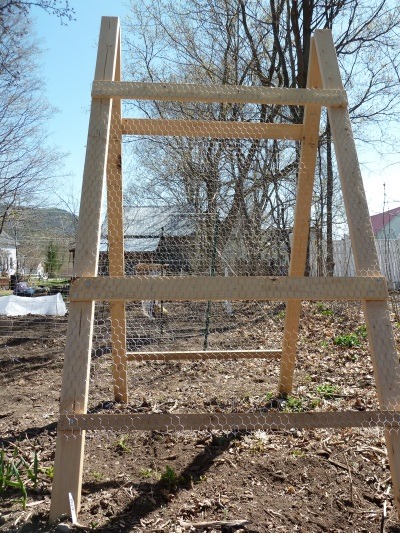
We are trying out some new trellis ideas.  The trellis netting works great for most things (tomatoes, peas, beans, cucumbers), but couldn’t really hang (no pun intended) with the heavier squashes such as Blue Hubbard.  Here is a new trellis I built using scrap wood and chicken wire.  May build a few more, this only took about an hour.

trellis

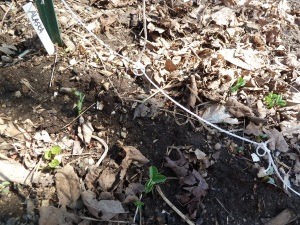
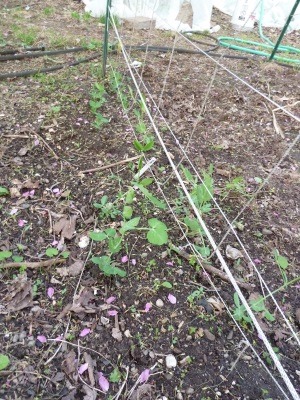
Peas poking through and then a few weeks later

peas1 peas2

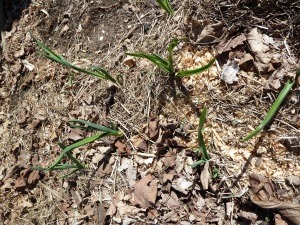
Garlic off to a good start.  It’s almost 2 feet high now

garlic

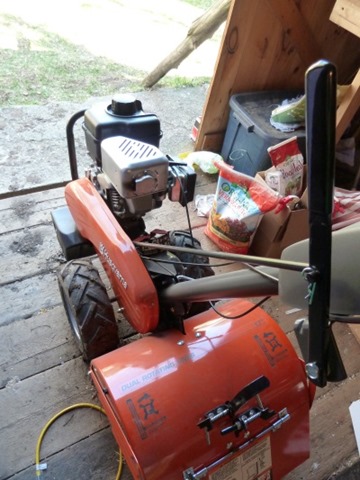
Bought a tiller

tiller

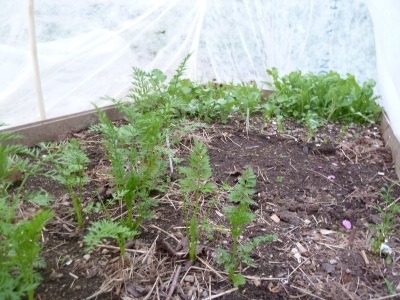
Hoop tunnel

hoop

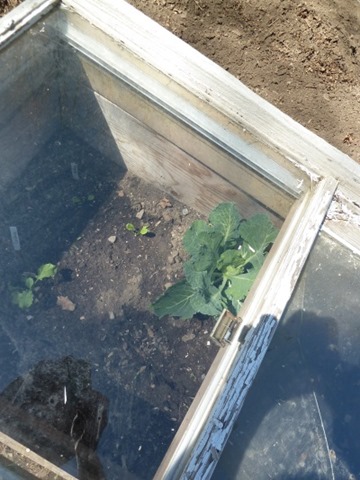
Cabbage overwintered in cold frame. Soon after we transplanted it, the chickens got into it. This poor cabbage can’t catch a break. It’s still limping along, so maybe it will come back.

cabbagecoldframe

You can see more photos and keep up with our 2013 garden on Flickr.

Simple DIY mini greenhouse

Last year I was looking around for a small greenhouse I could use for seed starts and hardening off plants.  There are a number of small ones with a few shelves and a plastic cover.  When I saw how simple they were, I didn’t see the point in spending the money.

8699832316_6b144ae143

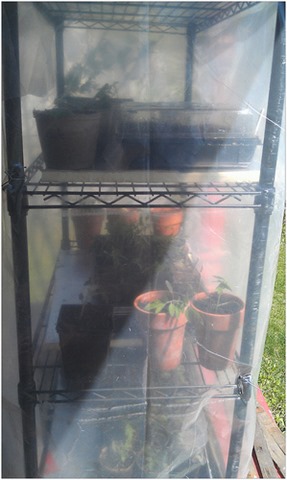
We already had a few of the wire rack shelving units that you can buy at a lot of places like garden/home supply stores, Target, etc.  I was already using one to start seeds in the basement, so I knew the general layout would work.  So I just bought some greenhouse plastic and basically wrapped one of those racks.  I fastened the plastic to the rack using wire along the vertical supports.  The plastic is thick enough to hold for the most part, although obviously it tears a bit over time.  It doesn’t have a nice zippered front on it, but other than that it’s the same principle and costs a lot less.

I used it a bit last year, but did have some issues with wind on our front porch.  This year I have a sandbag on the bottom rack and some clothesline fastening it to the porch railings.  That seems to do the trick as we’ve had some pretty good wind storms since I put it up this spring.  So far so good.

8699837282_901a52889a

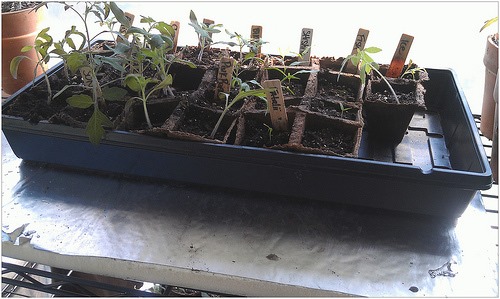
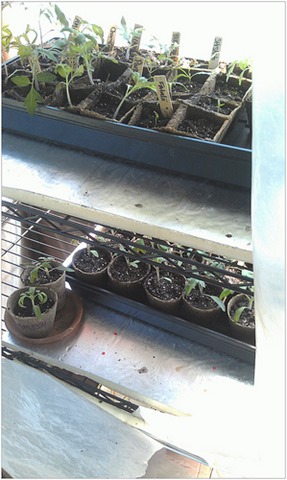
It’s working really well to start cold hardy plants and I’m also hardening off other plants that I’m starting in the cellar.  It gets nice and warm in there and doesn’t seem to dry out too fast.  The other trick I added this year is some foil covered insulation board to reflect more light from under the starting trays.  I’m also doing this in my basement underneath the heated seed starting mats I have and it seems to make a real difference.

8698717751_e649e1b72d

Seed starting tip for peas

I think I mentioned this last year, but wanted to throw it out there again. You’ll find this noted elsewhere online, I found it last year when growing peas for the first time.

Since peas can be started so early (apparently sometimes they will even sprout and grow through snow), the soil conditions can be all over the map. So I sprout my peas indoors first. It’s really simple. Take some paper towels or cloth and get it moist, but not wet. This year I used an old diaper. Put the peas inside. They like to roll around, so it can be helpful to roll up the sides in some fashion to keep them in. Put the paper towel or cloth inside a plastic bag or really anything that can hold some moisture in. I find a gallon ziploc works great and we always have used ones around. Just leave enough of a gap in the container or bag for some air to get in and out. You are basically making a little greenhouse.

After a couple of days, start checking them. As soon as you see sprouts you can plant them outside. Be careful with them at this stage as the little sprouts can be pretty fragile. If you break them off, that seed is done.

They seem to like a diaper better than a paper towel because this time a bunch sprouted by today, probably 60-70%, and I just started them during last weekend. Some of the sprouts actually grew through the diaper cloth. They are ready to go!

Another round of sausage making

Yesterday I made another round of breakfast sausages. I’ve been wanting to try a couple of different recipes and I had a pork shoulder in the freezer that needed to be used.

I did two variations on breakfast sausage. The first is the basic breakfast sausage recipe from Home Production of Quality Meats and Sausages. This book is awesome for technical information, including lots of sanitation regulation and helpful tips on food safety. I’m not sure all the recipes are the best though. For instance, this one had you grind the meat and then add the seasonings before the primary bind. Seems wrong to me. I always figure that meat benefits from extra time in contact with seasoning, particularly salt. So I mixed everything and let it sit for a bit in the fridge and freezer before grinding. Added a bit of extra pepper too, since I like a fairly peppery sausage. I think this one turned out pretty well.

The second was a maple breakfast sausage recipe from Home Sausage Making. This one had some onion and so I thought adding garlic might work too, but with the maple syrup I think it is supposed to be a sweeter flavor profile. Still good, but I’ll leave the garlic out next time. That’s the fun of experimenting.

Here are a few photos. The meat was really beautiful, Kristin thought it was a shame to “waste” it on sausage. I stuffed quite a bit of this into small links, but neglected to take photos of the finished product.

no images were found

2013 Seed Buying

Yesterday I bought seeds for this year to replenish our stock and thought I’d write down a couple of interesting observations.

Last year we were planning to have a large garden for the first time and we went a little nuts. Bought tons of seeds and I think we ordered from 4 or 5 different companies.  I think for the most part we used everything we bought and were pretty happy with most of it.

This year we decided to go a little simpler and decided to buy everything from two companies, High Mowing (a local VT company) and Baker Creek.  We had a chance to visit High Mowing last fall for their “Field Days” and we were very impressed with their operation.  Besides the plus of being local and thus having a higher possibility of getting seeds well adapted for our area, they are also doing some interesting seed development and hybridization work.  As far as Baker Creek, we just love their selection and advocacy for heirloom and open pollinated seeds.

One thing we decided to try for the coming year is to buy a few hybrids.  We had a decent amount of trouble with various wilts, rusts and blights last year.  We never did get zucchini going, although a lot of that was bug issues.  A lot of the tomatoes ended up with various levels of disease, although some of that may be rectified by giving each plant a bit more space and pruning better.

After a lot of experimentation last year, we are probably going to go a bit more basic this year until we have our own property with more room.  That means we probably won’t grow cauliflower (takes a lot of room and we didn’t have much luck getting heads to form), popcorn (proved out we can grow it and also takes a lot of room), melons (not enough sun, difficult to get started and once again room) and soybeans (we’ll definitely grow these when we have the space).

Every year we like to try some new things, so here are a few things we are planning to experiment with this coming season:

  • some hybrid cucumbers from High Mowing (a pickling and a slicing variety)
  • Kaitlen cabbage – a sauerkraut variety
  • Tomatoes – Amish Paste, Cherokee Purple, Black Cherry and Berkeley Tie Dye (a funky pink and green variety developed by Bradley Gates of Wild Boar Farms)
  • Potatoes – Russet and Russian Banana (fingerling) – had good luck last year with Yukon Gold, La Ratte fingerling and Red Norlands, want to try some other varieties)
  • Good Mother – an heirloom dry bean
  • Various greens – new salad mixes, a Bibb lettuce, Purple Orach, Purple Mizuna
  • Eggplant – Aswad (large dark purple Iranian variety) and Ping Tung (a Thai variety)

Should be another fun year and hopefully we can take what we learned last season and build on that.

Chickens in the snow

chickens in the snow


The chickens have enjoyed pecking around in an inch or two of snow, but this latest storm seems to have them a bit confused and tentative.  No wonder, a couple of feet is a lot more snow.  It’s fun to see their different colors contrasted against the snow though.